
Online shopping is changing faster than ever. Today’s consumers don’t just rely on standard Google searches or traditional ad banners—they rely heavily on peer reviews and conversational AI tools to figure out what to buy.
To win in this new environment, brands must master two critical areas:
- Ethical Incentivization: Collecting real, trustworthy product reviews without sounding fake or getting into legal trouble.
- AI-Driven Discovery: Getting products recommended inside conversational tools like ChatGPT, Claude, and specialized shopping agents.
Here is your complete guide to building customer trust, staying transparent, and optimizing for the future of digital retail.
+-------------------------------------------------------------------------+
|                       THE MODERN E-COMMERCE PLAYBOOK                    |
+-------------------------------------------------------------------------+
| ETHICAL REVIEWS                  | AI SHOPPING ASSISTANTS               |
| • Focus on honesty over positivity | • Shift from keywords to intent      |
| • Offer value-based rewards      | • Structured data feed integration   |
| • Leverage video & visual proof  | • Conversational product discovery   |
| • Link reviews to loyalty points | • Organic, trust-based placements    |
+-------------------------------------------------------------------------+
How to Collect Incentivized Reviews Ethically
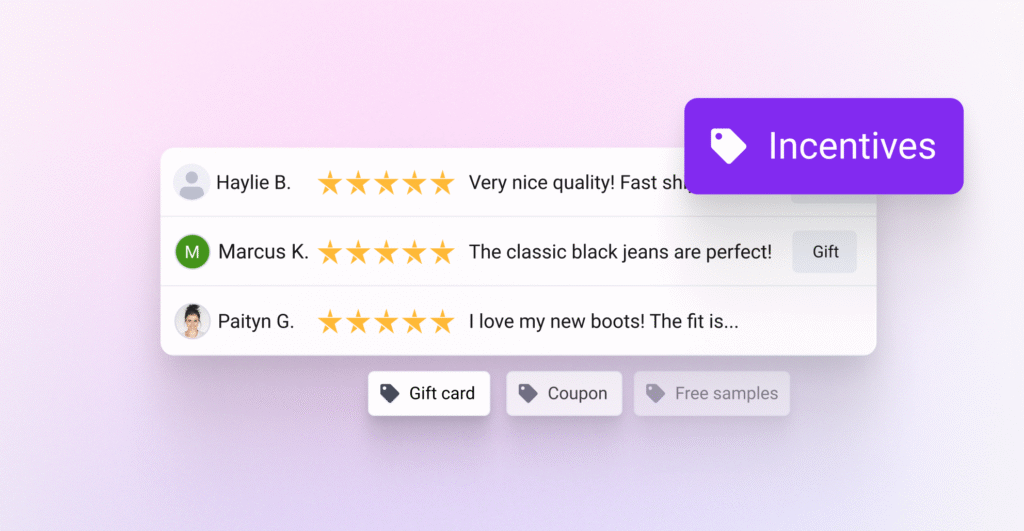
Customer reviews carry enormous weight. A few strong, honest opinions can double a product’s sales overnight. To gather feedback quickly, many brands offer small incentives—like discount codes, store points, or entry into a giveaway.
While offering rewards is effective, mismanaging the process can destroy customer trust and trigger steep penalties from regulatory bodies like the Federal Trade Commission (FTC).
Here is how to gather incentivized reviews while keeping your credibility intact.
1. Always Disclose the Incentive
Transparency isn’t optional—it’s mandatory. Customers and buyers should know upfront whenever a reviewer was compensated for their time.
- Bad Practice: Giving someone a $10 coupon and asking them to leave a hidden 5-star review.
- Ethical Practice: Adding a clear badge or line that reads: “The reviewer received a $10 discount code in exchange for their honest feedback.”
When you’re upfront, shoppers respect your honesty and trust the review even more.
2. Reward Honesty, Not Positive Ratings

Never pay specifically for positive feedback. Make it clear in your email or SMS request that constructive criticism is just as valuable as praise.
Example Prompt:
“We want to hear your real thoughts! Tell us what you loved about your recent order—and what we can do better next time. Share your feedback, and we’ll send a 15% discount code for your next purchase.”
When shoppers see a healthy mix of 4-star and 5-star reviews mentioning minor critiques (like slow shipping or snug sizing), the positive feedback feels far more genuine.
                  +-----------------------------------+
                  |      AUTHENTIC REVIEW MIX        |
                  +-----------------------------------+
                  |  4 & 5-Star Reviews (High Quality)|
                  |  + Honest Critiques (Realism)     |
                  +-----------------------------------+
                  |  Result: High Customer Trust     |
                  +-----------------------------------+
3. Switch to Value-Based and Non-Monetary Rewards
Cash rewards often attract spam or low-effort responses. Instead, consider rewards that align with your audience’s values:
- Perks & Access: Early access to new product drops or VIP community invites.
- Cause Marketing: “Leave a review, and we’ll plant a tree in your name.”
- Loyalty Points: Let customers earn points inside your existing store rewards program.
Linking reviews to a loyalty program creates an ongoing relationship instead of a one-time transaction.
4. Prioritize User-Generated Photos and Videos
Text reviews can be easy to fake, but customer videos and photos provide instant proof.
Encourage shoppers to snap a quick photo or record a short video showing the product in action. Consider hosting monthly visual review contests where the most creative user video wins a store gift card. Visual proof reduces return rates because future buyers see exactly what the product looks like in real life.
The Shift to AI Shopping Assistants

While customer reviews build trust, AI shopping assistants are rapidly changing how shoppers find products in the first place.
Instead of typing short phrases into a traditional search bar and scrolling through pages of sponsored ads, millions of consumers now use conversational tools like ChatGPT to ask detailed, lifestyle-based questions.
       OLD WAY:   Search Bar ----> [ Short Keywords ] ----> Ad-Heavy Search Results Page

       NEW WAY:   AI Chat ----> [ Natural Language Context ] ----> Curated Product List with Images & Links
From Search Engines to Conversations
Shoppers don’t search with robotic keywords anymore. Instead, they type complex, conversational prompts:
- “What are the best clean skincare gift sets under $50 for someone with sensitive skin?”
- “Find me a durable, waterproof carry-on bag that fits in overhead bins on European airlines.”
AI shopping assistants interpret the user’s intent, scan verified data sources across the web, and return a tailored list of recommendations with pricing, reviews, images, and direct checkout links.
How AI Assistants Recommend Products
AI assistants don’t just guess; they aggregate real-time signals from across the internet:
+-------------------------------------------------------------------------+
|                     HOW AI SHOPPING ASSISTANTS WORK                     |
+-------------------+-----------------------------------------------------+
| Structured Data   | Connects directly to platforms like Shopify to check|
| Integrations      | real-time pricing, stock status, and product tags.  |
+-------------------+-----------------------------------------------------+
| Natural Language  | Reads open-ended prompts and extracts lifestyle     |
| Interpretation    | needs, budget constraints, and preferences.         |
+-------------------+-----------------------------------------------------+
| Organic Social    | Pulls sentiment and real customer opinions from     |
| Proof             | verified reviews, Reddit discussions, and blogs.    |
+-------------------+-----------------------------------------------------+
Unlike traditional search engines that prioritize paid ad placements, AI recommendations favor relevance, accurate product data, and genuine social proof.
How Brands Can Prepare for AI Commerce

If you want your products recommended by AI assistants, you need to adapt your store structure today. Here are four steps to get started:
1. Clean Up Your Structured Product Data
AI engines rely on accurate data feeds. Make sure your product titles, descriptions, categories, tags, and pricing are clean, structured, and updated automatically through your e-commerce platform (like Shopify or WooCommerce).
2. Write Descriptions Based on Use Cases
Don’t just list technical specifications. Write product descriptions that answer real-world problems.
- Instead of just listing: “100% Cotton Sweatshirt.”
- Include context: “A breathable, lightweight cotton sweatshirt designed for crisp autumn morning runs and casual weekend loungewear.”
This gives AI models the necessary context to match your product with lifestyle queries.
3. Encourage Honest External Mentions

Because AI tools pull information from around the web, having active discussions, blog mentions, and un-sponsored user reviews across third-party platforms (like Reddit, industry blogs, and review sites) boosts your brand’s AI visibility.
Frequently Asked Questions
1.Is it illegal to give discounts for customer reviews?
No, offering discounts is legal as long as the offer is non-discriminatory (given for both good and bad reviews) and the incentive is clearly disclosed on the published review.
2. How do AI shopping tools choose which products to recommend?
AI tools evaluate product data feeds, natural language context, pricing, inventory availability, and real customer sentiment from verified review sources across the web.
3.Do AI shopping assistants use paid ad placements?
Most leading conversational AI assistants currently rely on organic relevance and structured data feeds rather than traditional banner ads or paid search spots.
4.Can small e-commerce stores rank in AI shopping recommendations?
Yes! Because AI tools prioritize relevant product details and real customer satisfaction over massive ad budgets, niche brands with strong reviews have a great chance of being featured.
5.What is the fastest way to make my product catalog AI-ready?
Keep your store’s product feed clean, accurate, and connected through your e-commerce platform. Ensure every product listing includes rich descriptions, clear pricing, and structured metadata tags.