
Product management is undergoing its biggest transformation in decades.
It isn’t about adopting another flashy framework or copying a new tech trend. Instead, the core expectations around product teams are shifting at every level—from executive suites and engineering pods to customer support desks and the AI tools running in the background.
The product managers (PMs) who succeed won’t just be taskmasters checking off feature requests. The PMs of the future will be the ones who create clarity, eliminate confusion, and deliver real business impact in an era where information is everywhere, but true alignment is rare.
Here are the nine fundamental shifts shaping the modern product landscape—and practical ways to prepare for them.
+-------------------------------------------------------------------------+
|                    THE 9 BIG SHIFTS AT A GLANCE                         |
+-------------------------------------------------------------------------+
| 1. Focus on Outcomes, Not Output  | 6. Landings Matter More Than Launches |
| 2. AI as a Daily Work Partner     | 7. Speed of Learning is Your Real Moat|
| 3. Clear Communication Beats All  | 8. Flexible "AI-Speed" Infrastructure |
| 4. Taste & Design Become the Moat | 9. Becoming an AI-First Tech Team   |
| 5. Security & Trust Come First    |                                     |
+-------------------------------------------------------------------------+
1. Focus on Outcomes, Not Just Output
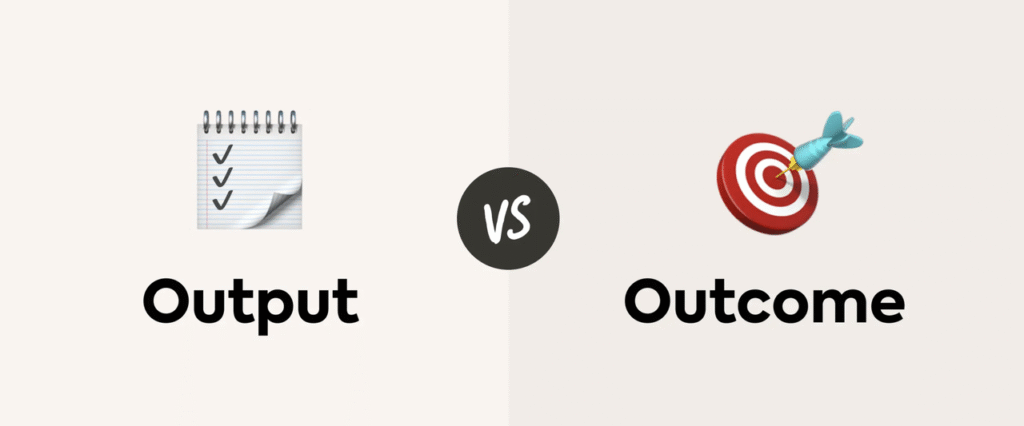
For years, a PM’s success was judged by raw output: Did you ship the feature on time? Did you close out the sprint? Is the roadmap moving forward?
That mindset is quickly fading. Companies face tighter budgets, higher scrutiny, and a simple question from executives: “What actually changed for the business because we built this?”
Instead of counting launches, leaders are looking at metrics that prove real-world value:
- Time-to-Value: How fast does a customer get actual benefit after signing up?
- Real Adoption: Are people using the feature regularly, or did they try it once and abandon it?
- Customer Retention: Did this update keep users from canceling their subscriptions?
- Direct Business Impact: Did revenue, team efficiency, or user satisfaction measurably improve?
Successful PMs focus on solving real user problems, not just emptying a back-log of feature requests.
2. AI Will Become Your Daily Co-Pilot
AI isn’t going to replace product managers, but PMs who use AI effectively will outpace those who don’t.
Rather than treating AI like a novelty app, high-performing PMs integrate it across their daily workflow:
+-------------------------------------------------------------------------+
|                       HOW PMs USE AI AS A CO-PILOT                      |
+-------------------+-----------------------------------------------------+
| Research          | Summarizes dozens of customer interviews and spots  |
|                   | hidden patterns across support tickets instantly.   |
+-------------------+-----------------------------------------------------+
| Strategy          | Scans competitive markets and models user behavior |
|                   | scenarios during early discovery phases.            |
+-------------------+-----------------------------------------------------+
| Delivery          | Helps draft user stories, acceptance criteria, and  |
|                   | catches tricky edge cases before engineering starts.|
+-------------------+-----------------------------------------------------+
| Analytics         | Flags sudden drops in user engagement and links     |
|                   | feature usage directly to retention metrics.        |
+-------------------+-----------------------------------------------------+
AI gives you leverage—it handles the heavy lifting of data crunching so you can focus on strategic decisions.
3. Clear Communication Beats Technical Jargon

As tech products get more complex and interconnected, attention spans are shrinking. In this environment, a PM’s most powerful superpower is simple, effective communication.
Great communication isn’t a soft background skill; it is a force multiplier. PMs who excel will:
- Write clear, concise project summaries that anyone can understand.
- Turn complicated technical trade-offs into simple choices for executives.
- Tell compelling stories that rally engineering, design, and sales teams around a single vision.
- Guide teams and build consensus without relying on authority or titles.
If people don’t understand why a feature matters, they won’t build it well—and customers won’t buy it.
4. Exceptional Design Becomes the Main Advantage
When any team can use AI to generate basic user interfaces in seconds, standard design isn’t enough to stand out. As Figma CEO Dylan Field has pointed out, thoughtful design sits at the top of the value stack.
When everyone uses similar models, code libraries, and infrastructure, your product point of view and user experience become your biggest competitive advantage.
                  +-----------------------------------+
                  |      EXCEPTIONAL DESIGN & CRAFT   |  <-- Your True Moat
                  +-----------------------------------+
                  |    Standard AI & Code Libraries   |
                  +-----------------------------------+
                  |  Basic Infrastructure & Cloud     |
                  +-----------------------------------+
Users want a smooth, unified experience across every touchpoint—mobile apps, web browsers, desktop canvases, and AI assistants. If your app feels like six different tools glued together, users will leave. Protecting user experience from clutter and half-baked features is a core PM responsibility.
5. Security and Trust Come First

AI features can no longer be tossed into a product just to see what sticks. For enterprise buyers, security isn’t a secondary check—it’s the front door.
As Cisco CPO Jeetu Patel highlighted, security and productivity are no longer at odds; safety is a prerequisite for productivity. If an AI feature introduces privacy risks, data leaks, or unexplainable errors, enterprise buyers will reject it immediately.
PMs must design for safety from day one:
- Define Data Boundaries: Clarify what data gets stored, who owns it, and how it is used.
- Give Admins Control: Build settings that allow business owners to choose which AI models process their data.
- Plan for Failures: Always have a backup plan or escalation path for when an AI model makes a mistake.
6. Landings Matter Much More Than Launches
Shipping a feature isn’t the finish line—it’s just the starting block.
Former Google product leader Lisa Kamm famously noted that companies often fall into the trap of rewarding launches rather than landings. When you only reward launches, teams push out features that nobody actually wants or uses.
       OLD WAY:   [ Brainstorm ] ----> [ Build ] ----> [ LAUNCH! ] (Stop working)

       NEW WAY:   [ Brainstorm ] ----> [ Build ] ----> [ Launch ] ----> [ Measure Landing & Iterate ]
High-performing teams focus on what happens after release day:
- Run Landing Reviews: Revisit features 60 to 90 days post-launch to review real adoption data.
- Prune the Backlog: Be willing to retire features that aren’t delivering value rather than leaving them to clutter the product.
- Shared Ownership: Hold engineering, design, and product management accountable for the same long-term customer usage goals.
7. Your Learning Speed is Your Main Competitive Edge
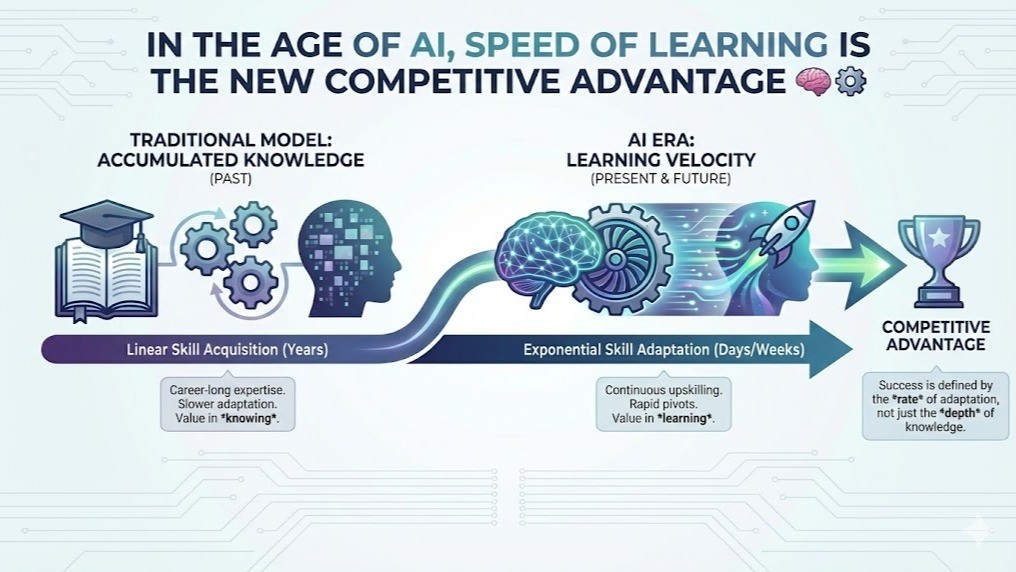
When competitors can copy your product features in a few weeks using modern AI tools, your true advantage isn’t what you know right now—it’s how fast your team learns and adapts.
Miro CEO Andrey Khusid emphasizes that the ultimate moat for any business is its speed of learning: how quickly your team spots a market signal, cuts through the noise, and acts on it.
To build a fast-learning culture:
- Treat the Roadmap as Hypotheses: View planned features as ideas to test, not permanent promises carved in stone.
- Fail Fast and Kill Bad Ideas: If a two-week prototype gets strong negative feedback from users, drop it immediately and pivot.
- Centralize User Insights: Combine feedback from support tickets, sales calls, and product analytics into a single dashboard so the whole team sees what’s working.
8. Build Flexible “AI-Speed” Release Infrastructure
If your team runs on quarterly release cycles, but the AI models you rely on update every week, your infrastructure becomes a bottleneck.
Vercel VP of Product Aparna Sinha describes building in the AI space as “building in an earthquake”—the best models and tools shift constantly. To keep up, product teams need release systems built for rapid change.
+-------------------------------------------------------------------------+
|                  TRADITIONAL VS. AI-SPEED RELEASE INFRA                 |
+-------------------------+-----------------------------------------------+
| Traditional Infrastructure | Quarterly releases, rigid model integrations,|
|                         | long deployment pipelines, slow rollbacks.    |
+-------------------------+-----------------------------------------------+
| AI-Speed Infrastructure | Feature flags, instant A/B testing of models,  |
|                         | automated eval checks, one-click rollbacks.   |
+-------------------------+-----------------------------------------------+
PMs don’t need to write backend code, but they must ensure their teams use feature flags, model-testing sandboxes, and automated evaluation tools. This allows you to swap out an old AI model for a faster, cheaper, or safer one without breaking the application for users.
9. Shift from “Using AI Tools” to Becoming an “AI-First” Team

Having a long list of subscription AI tools doesn’t automatically make your company innovative. True digital transformation happens when your product team becomes fundamentally AI-first.
Being AI-first means defaulting to AI as the starting point for exploring problems, analyzing user data, and building prototypes.
To create an AI-first product culture:
- Rethink Standard Rituals: Incorporate an “AI lens” into sprint planning, roadmap reviews, and postmortems to spot manual processes that can be automated.
- Build an Internal Playbook: Document successful prompts, trusted AI templates, and safety workflows so team members don’t have to reinvent the wheel.
- Run Experimental Sprints: Challenge your product team to complete an entire sprint cycle using AI tools at every phase, then compare the speed, output quality, and team experience against traditional methods.
Frequently Asked Questions
Will AI replace product managers entirely?
No. AI excels at crunching data, drafting initial documentation, and spotting patterns, but it lacks empathy, strategic vision, and context. PMs are essential for understanding user emotions, setting vision, navigating trade-offs, and building cross-functional alignment.
What is the single most important metric for PMs today?
There isn’t just one, but Time-to-Value (TTV) and long-term retention are top priorities. Instead of tracking how fast features ship, focus on how quickly customers receive real value and whether they keep coming back.
How can small product teams compete with big tech companies using AI?
Small teams have a massive advantage in learning speed. While large companies deal with bureaucratic approval chains, small teams can spot market signals, test new AI models, and pivot their product in days instead of months.
What makes an AI feature “trustworthy” to enterprise buyers?
Enterprise buyers look for clear data privacy policies (ensuring their data isn’t used to train public models), strong admin controls, clear audit logs, predictable failure states, and compliance with industry regulations.
How can I start making my product team AI-first without disrupting work?
Start small. Choose one repetitive task—like summarizing customer feedback notes or drafting initial user stories—and use AI to automate it. Once the team sees the time saved, gradually introduce AI into strategy, prototyping, and analytics.